Fingerprints in Forensic Science: Meaning, Uniqueness, History, and Importance
Fingerprints play a vital role in forensic science and criminal investigations. Even today, when advanced techniques like DNA analysis exist, fingerprints remain one of the most trusted and widely used methods of identification. Their uniqueness, permanence, and easy availability make them extremely valuable in solving crimes.
In this blog, we will clearly explain what fingerprints are, why they are unique, their history in forensic science, their importance in criminal investigations, and how they compare with DNA evidence.
What Are Fingerprints? (Forensic Science Perspective)
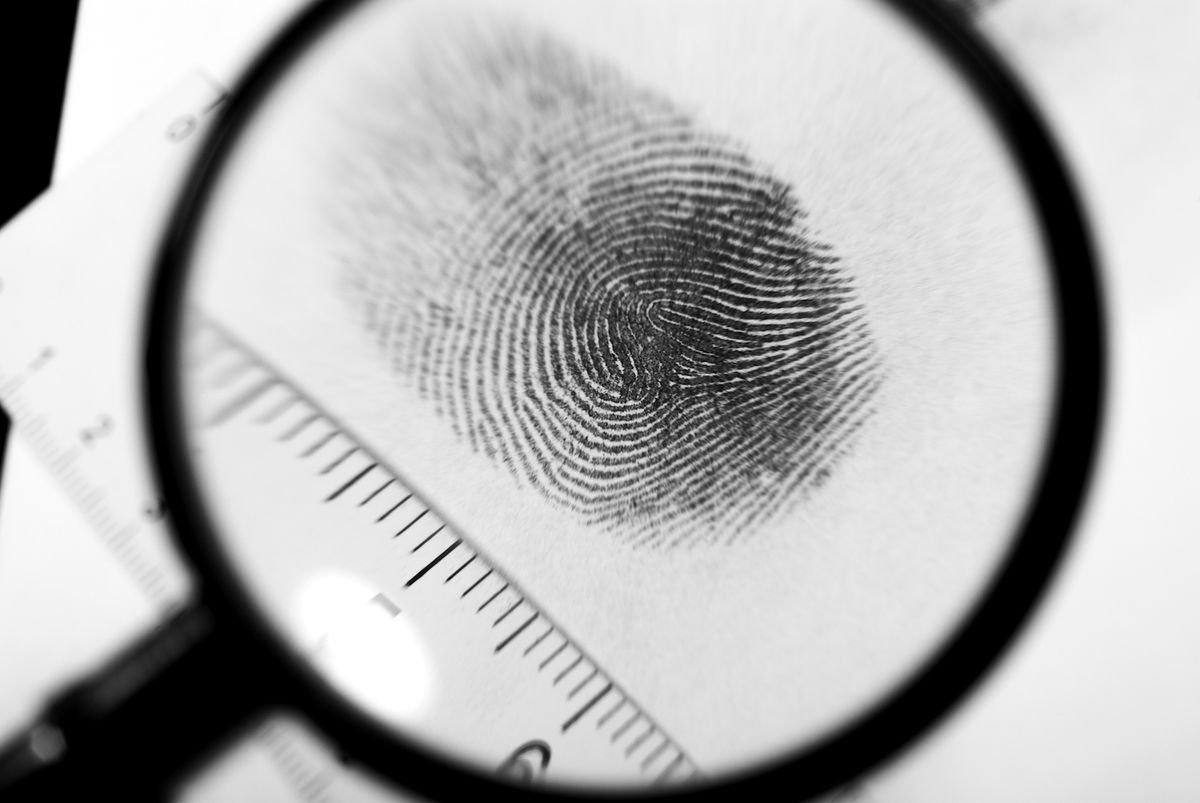
Fingerprints are the patterns formed by ridges and furrows present on the fingertips of human hands. These ridges are known as friction ridge skin. While their natural function is to improve grip, forensic science uses them for personal identification.
Fingerprints develop inside the mother’s womb between the 10th and 16th week of pregnancy. Once formed, they remain unchanged throughout a person’s lifetime. Although minor cuts or burns may damage the skin temporarily, the original ridge pattern usually reappears after healing.
In forensic investigations, experts classify fingerprints into three main types:
-
Patent fingerprints, which are clearly visible
-
Latent fingerprints, which are invisible and need development
-
Plastic fingerprints, which form impressions on soft surfaces
Among these, investigators most commonly encounter latent fingerprints at crime scenes.
Why Are Fingerprints Unique? (Scientific Explanation)
Fingerprint uniqueness comes from the random formation of ridge details, known as minutiae. These include ridge endings, bifurcations, dots, islands, and short ridges. Although many people share similar fingerprint patterns such as loops, whorls, or arches, the arrangement of minutiae always differs.
Moreover, fingerprint formation depends on both genetic factors and environmental influences inside the womb. Pressure, movement, and blood flow affect how ridges develop. As a result, even identical twins have different fingerprints.
Forensic experts rely on these individual ridge characteristics to identify a person. Therefore, fingerprints provide strong scientific proof of identity when examined correctly.
History of Fingerprint Identification in Forensic Science
The use of fingerprints for identification dates back several centuries. However, forensic science began using fingerprints systematically in the late 19th century. Sir Francis Galton played a key role by proving that fingerprints are both unique and permanent.
Later, Sir Edward Henry introduced the Henry Classification System, which helped organize fingerprint records efficiently. Law enforcement agencies across the world, including in India, adopted this system.
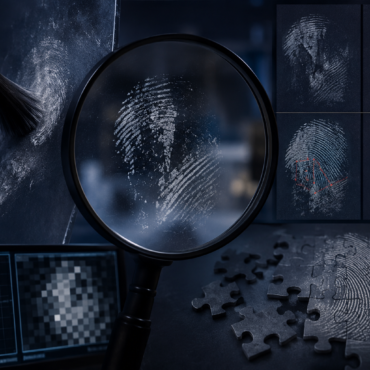
Furthermore, the Francisca Rojas case of 1892 became the first criminal case solved using fingerprint evidence. Since then, fingerprint identification has evolved from inked impressions to digital records and Automated Fingerprint Identification Systems (AFIS).
Importance of Fingerprints in Criminal Investigations
Fingerprints remain extremely important in criminal investigations because they provide direct physical evidence. Whenever a person touches an object, they may leave behind fingerprints without realizing it.
As a result, fingerprints help investigators:
-
Identify unknown suspects
-
Connect a suspect to a crime scene
-
Eliminate innocent individuals
-
Support other forensic evidence
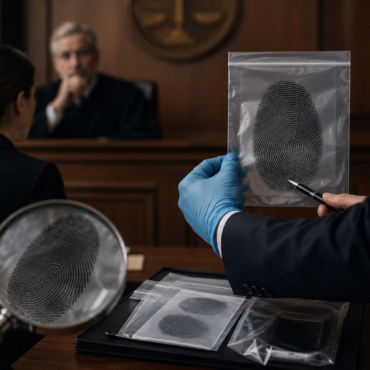
Investigators frequently use fingerprint evidence in cases involving burglary, theft, homicide, assault, and robbery. Since fingerprints offer objective and scientific proof, courts widely accept them as reliable evidence.
Fingerprints vs DNA: Which Is More Reliable?
Both fingerprints and DNA play important roles in forensic science. However, they serve different investigative purposes.
Fingerprints are usually faster and easier to collect from crime scenes. Investigators can quickly compare them using AFIS databases. In contrast, DNA analysis requires biological samples and laboratory testing, which takes more time and costs.
Therefore, fingerprints work best for quick identification, while DNA works best for confirming biological involvement. In most modern cases, investigators achieve the strongest results by using both fingerprint and DNA evidence together.
Conclusion
Fingerprints continue to serve as a cornerstone of forensic science. Their uniqueness, permanence, and practical value make them essential in criminal investigations. Even with modern forensic advancements, fingerprints remain irreplaceable due to their speed, reliability, and strong scientific foundation.


Post comments (0)