Introduction
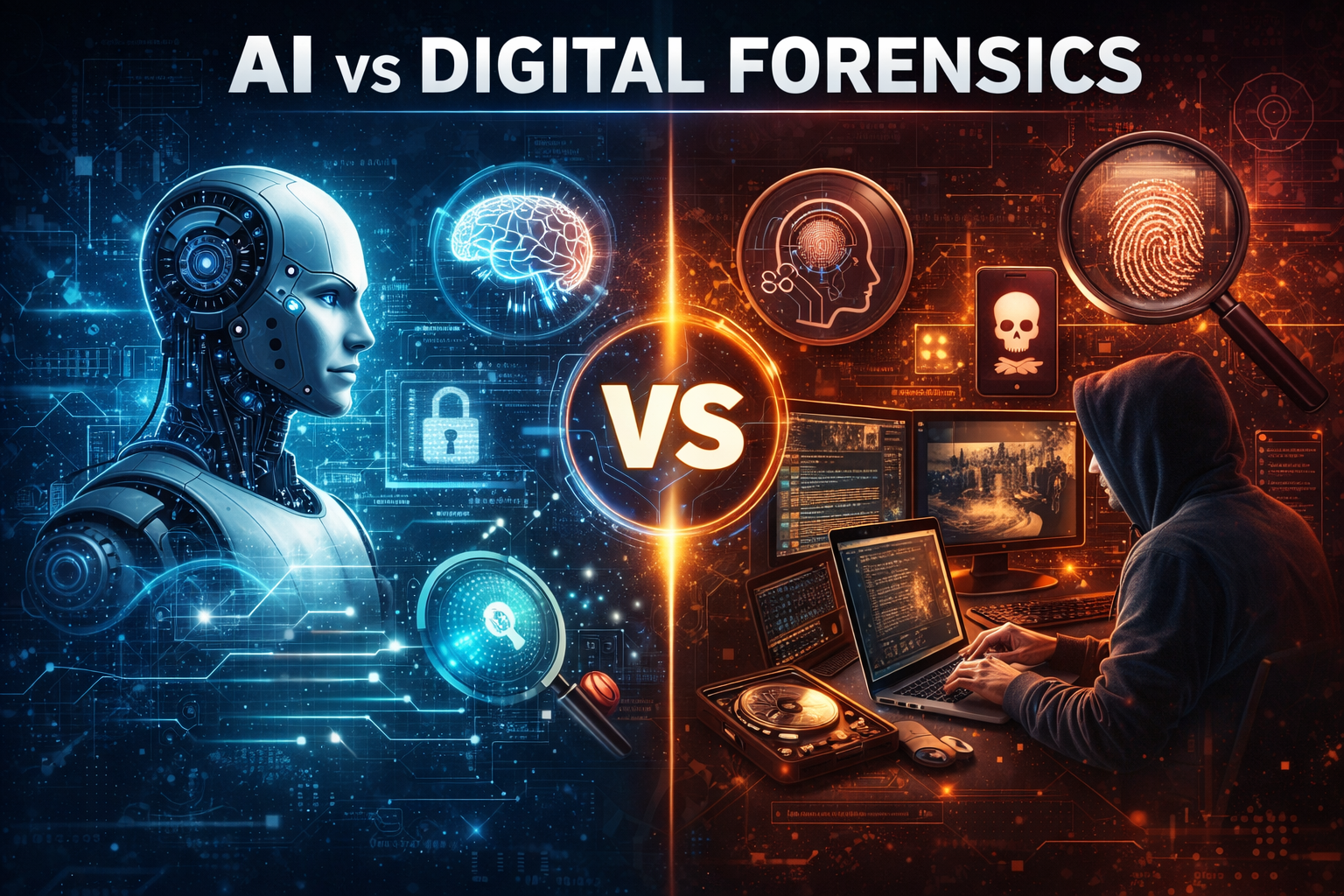
The debate around AI vs. digital forensics is becoming more relevant as technology evolves rapidly. On one hand, artificial intelligence is helping investigators solve complex cases faster. On the other hand, cybercriminals are also using AI to create advanced attacks and hide evidence.
So, can AI outsmart digital forensic experts? Or will it become their most powerful tool? Let’s explore how artificial intelligence in digital forensics is shaping the future of investigations.
What is Artificial Intelligence in Digital Forensics?
Artificial intelligence (AI) refers to machines that can learn, analyze, and make decisions like humans. In the field of digital forensic investigation, AI helps automate tasks that would otherwise take hours or even days.
AI is used for:
- Data analysis and pattern recognition
- Image and video verification
- Malware detection
- Cyber threat identification
As a result, AI significantly improves the speed and accuracy of forensic investigations.
How AI is Transforming Digital Forensics
1. Faster Data Analysis
Digital forensic experts often deal with massive amounts of data. Traditionally, analyzing this data took a lot of time. However, AI can process large datasets within minutes.
For example:
- Sorting thousands of files
- Identifying suspicious patterns
- Filtering relevant evidence
Therefore, AI reduces investigation time and improves efficiency.
2. Deepfake Detection
AI plays a major role in detecting manipulated media. With the rise of deepfakes, forensic experts rely on AI tools to identify fake videos and images.
AI detects:
- Facial inconsistencies
- Pixel-level manipulation
- Voice anomalies
Consequently, AI helps prevent misinformation and digital fraud.
3. Automated Threat Detection
AI systems can monitor networks and detect cyber threats in real time. Unlike traditional systems, AI learns from patterns and adapts to new threats.
This helps in:
- Identifying hacking attempts
- Preventing data breaches
- Detecting unusual activities
4. Malware Analysis
AI-powered tools can analyse malware behaviour quickly. They can:
- Detect unknown threats
- Classify malware types
- Predict future attacks
As a result, AI strengthens cybersecurity and forensic capabilities.
How Cybercriminals Use AI
While AI benefits investigators, cybercriminals also use it to their advantage. This creates a constant battle in the AI vs digital forensics landscape.
Common AI-Based Threats:
- Deepfake scams
- AI-generated phishing emails
- Automated hacking tools
- Voice cloning fraud
For instance, attackers can create realistic fake videos or voices to trick individuals or organisations.
Challenges of AI in Digital Forensics
Despite its advantages, AI also presents several challenges:
1. Accuracy and Bias
AI systems depend on training data. If the data is biased or incomplete, results may be inaccurate.
2. Legal Admissibility
Courts require clear explanations of evidence. AI decisions can sometimes be difficult to interpret.
3. Rapidly Evolving Threats
Cybercriminals constantly improve their techniques. Therefore, AI systems must be updated regularly.
AI vs Digital Forensics: Who Wins?
The answer is not straightforward. Instead of competing, AI and digital forensics work together.
AI as a Tool, Not a Replacement
AI cannot replace human expertise. Digital forensic experts:
- Interpret evidence
- Make legal decisions
- Ensure accuracy
Meanwhile, AI supports them by handling repetitive and complex tasks.
Future of AI in Digital Forensics
The future of artificial intelligence in digital forensics looks promising. Emerging trends include:
- AI-powered forensic labs
- Real-time evidence analysis
- Blockchain verification
- Automated cybercrime detection
Additionally, integration of AI will make investigations faster and more reliable.
Why This Matters for Businesses and Individuals
Understanding AI vs. digital forensics is important for:
- Protecting sensitive data
- Preventing cyber fraud
- Strengthening cybersecurity systems
- Supporting legal investigations
Businesses, in particular, must adopt AI-driven forensic solutions to stay ahead of cyber threats.
Conclusion
The battle of AI vs. digital forensics is not about one replacing the other. Instead, it is about collaboration. Artificial intelligence enhances the capabilities of digital forensic experts, while human expertise ensures accuracy and ethical decision-making.
As cyber threats continue to evolve, combining AI with digital forensics will be the key to staying ahead. Ultimately, the future belongs to those who can effectively use technology to uncover the truth.



Post comments (0)